Who Is Responsible for Drains When Buying a House?
One of the most confusing aspects of buying a house is understanding which drains you are responsible for once you own the property. Are you responsible for the entire system, or just the pipes on your land? If the main sewer is shared, who pays for repairs? Does the council own it? These questions matter — a shared drain that fails can become a dispute with your neighbour. A collapsed drain you thought was the council’s responsibility becomes your bill. This guide explains the legal position, the different types of drainage ownership in the UK, and how a drain survey can clarify exactly what you are taking on.
The Three Types of Drain Ownership
In the UK, drains fall into three distinct categories: private drains, shared drains, and public sewers. Understanding which applies to your property is the first step.
Private Drains — Your Responsibility
A private drain is entirely on your property and serves only your property. The pipes run from your house to the public sewer connection point, entirely within your boundary (or sometimes with a legal right of access across a neighbour’s land). You own it, you maintain it, and you pay for any repairs.
This is straightforward in principle. In practice, it can be complicated if your private drain crosses a neighbour’s property — something that is not uncommon in Manchester, particularly in terraced streets where properties share access routes or back alleys. In these cases, there will be a legal right of way (a “wayleave” or easement) documented in the property’s deeds. This right grants you access to maintain the drain, but the neighbour’s permission is still required. If the neighbour is uncooperative, maintenance can become difficult.
Shared Drains — Joint Responsibility
A shared drain serves two or more properties. It may run along the boundary between your property and a neighbour’s, or it may run through one property’s land (usually the one nearer the street) while serving both properties and possibly others.
When a drain is shared, responsibility for maintenance and repair is shared too — unless the deeds specify otherwise. This is where disputes arise. If a shared drain fails and repair is needed, the cost is typically split equally between all users, unless the deeds say something different.
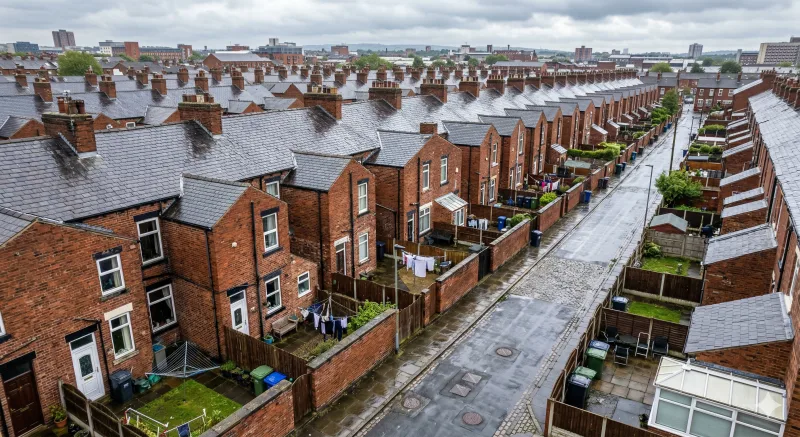
This arrangement is common in Manchester, particularly in Victorian terraced rows. A property built in the 1880s in Levenshulme or Longsight often shares drainage with its neighbour. Before buying such a property, you need to understand the shared arrangement and ideally have it confirmed in writing. A homebuyer drain survey identifies whether a drain is shared — but to understand the legal responsibility, you need to check the property’s title deeds.
If you are planning any repair work to a shared drain, you need the written consent of the other user(s). Attempting repairs without consent can expose you to legal action from your neighbour. Even if the repair is necessary, you cannot simply dig up a shared drain and fix it without consultation.
Public Sewers — The Council’s Responsibility
A public sewer is owned and maintained by the water company (in Manchester’s case, United Utilities). It serves multiple properties, is located in the public road or on land owned by the council, and the water company is legally responsible for maintaining it.
Your private drain connects to the public sewer at a junction point called the public sewer connection. The water company is responsible for the sewer from that junction point onwards. If the public sewer fails, it is United Utilities’ responsibility and cost to repair it.
The key phrase here is “from the public sewer connection onwards.” The connection itself is sometimes a grey area. In many Manchester properties, the connection point is under the front pavement — technically, this may be considered part of the public sewer or part of the private drain, depending on where exactly the junction is. This is why a drain survey and a clear understanding of the deeds are both important.
United Utilities and Adoption of Private Drains
In some cases, United Utilities (the water company) may decide to adopt a private drain — meaning they take ownership and responsibility for it. This is more common with newer drains that were built to modern standards and properly recorded, but it can happen with older systems.
When a drain is adopted, the property owner loses responsibility for it. Maintenance and repairs become the water company’s liability. This is advantageous, but adoption is at the water company’s discretion and does not happen automatically.
In Manchester, many older properties have never had their drains adopted. If you are buying a Victorian terrace in Rusholme or a 1930s semi in Burnage, assume the private and shared drains remain your responsibility unless there is clear evidence of adoption.
Boundary Ownership and Easements
A question that often arises: if a drain crosses the boundary between your property and a neighbour’s, who owns it?
Ownership depends on where the drain physically is located. If it is entirely within your boundary, you own it. If it is entirely within your neighbour’s boundary, they own it — but you should have a legal easement (a formal right of way) allowing you to access and maintain it. If it runs along the boundary, it may be shared.
These arrangements are documented in the property’s title deeds or in a formal easement agreement. Before buying a property, your solicitor should review the deeds and flag any easements or shared drainage. If the deeds are unclear, a drain survey provides physical evidence of where the drain actually runs.
This matters in Manchester because many properties have been modified, extended, or had their boundaries altered over the decades. A drain that once ran entirely within the property boundary might now cross into a neighbouring garden. Or the opposite — a neighbour’s drain might run through part of what is now your property.

How a Drain Survey Clarifies Responsibility
A professional CCTV drain survey shows exactly where the pipes are, what they connect to, and where the public sewer connection is located. This information is essential for understanding your responsibility.
The survey report includes a drainage plan that identifies each pipe run, the materials used, the direction of flow, and the connection points. It shows whether a drain is private, shared, or connects to the public sewer. It also identifies the location of the public sewer connection — crucial information because the boundary between private and public responsibility is at that point.
A survey cannot tell you the legal responsibility (that is a matter of deeds and title), but it can tell you the physical reality. If the deeds say one thing and the survey reveals something different — for example, the deeds mention a shared drain but the survey shows two separate pipes — the physical reality may need to be resolved with your neighbour or your solicitor.
Manchester-Specific Considerations
Manchester’s drainage landscape reflects decades of housing development, modification, and change. Here are some local factors that affect drain responsibility:
Victorian and Edwardian Properties
Properties built between 1880 and 1939 — common across inner Manchester suburbs like Levenshulme, Longsight, Chorlton, and Withington — frequently have shared drainage with neighbours. These properties were often built in terraces or semi-detached pairs, and the original builders typically used shared drains to save cost. This shared arrangement is recorded in the deeds, but not all property owners are aware of it.
Combined Sewers
Many older parts of Manchester have combined sewer systems, where foul water and surface water share the same pipes. This is relevant to drain responsibility because if either property causes excess flow — say, by adding an extension and increasing water discharge — the shared drain may become overloaded. Disputes about who is responsible for addressing the overload can arise.
Terraced Houses and Access Rights
In areas like Longsight, Ancoats, and Ardwick, where properties are closely spaced, drain access often requires going through a neighbour’s property. A formal easement should be in place, but not all properties have clearly documented rights. Before buying, verify that any necessary access rights are properly recorded.
Post-War Housing Estates
Wythenshawe, Langley, and other post-war estates were often developed as unified schemes with planned drainage systems. In many cases, the original developers’ records have been lost. If you are buying in one of these areas, assume the drains are your private responsibility unless you have clear evidence of adoption by United Utilities or a shared arrangement documented in the deeds.
Questions to Ask Before Buying
Before you complete a purchase, your solicitor should obtain answers to these questions:
- Are there any easements or rights of way affecting the property that relate to drainage?
- Does the property share drainage with any neighbouring property? If so, is this documented in the deeds?
- Are there any disputes or agreements with neighbours regarding shared drainage?
- Is the drainage all private, or does it include a public sewer connection?
- Has the water company ever formally adopted any part of the drainage system?
- Are there any historical records of problems with the drains — flooding, recurring blockages, disputes with neighbours?
Your solicitor will raise these enquiries with the seller’s solicitor. A homebuyer drain survey provides the physical evidence to support these enquiries.
What Happens if a Shared Drain Fails?
If a shared drain fails and repair is needed, here are the typical scenarios:
If you discover the problem first, you notify your neighbour and suggest they commission a repair quote. If they agree, you split the cost. If they refuse to acknowledge the problem, you may need to pursue it through small claims court or contact your local environmental health officer (though they can only act if there is a genuine public health risk).
If the problem affects multiple properties along a terraced row, the matter can become complex. The original builder may have made each property responsible for a different section of a drain that serves all properties — this information would be in the deeds.
The practical reality in Manchester is that disputes over shared drains do occur, and they can become expensive and unpleasant. This is why understanding the arrangement before you buy is critical. If the current owner cannot provide clear documentation of how shared maintenance works, or if there is any hint of an existing dispute, you should be cautious.
Cost Implications for Repairs
Understanding drain responsibility directly affects repair costs:
- Private drain failure: You pay the full repair cost. If the repair is urgent (collapsed drain, sewage backing up into the property), you cannot wait for neighbour agreement — you must act immediately.
- Shared drain failure: You and co-users split the cost, unless the deeds specify otherwise. However, if only one property is affected (e.g., because of a specific defect in that section), the responsibility may fall to that owner alone.
- Public sewer failure: United Utilities is responsible for repair and costs nothing to the property owner. However, proving that the failure is in the public sewer and not the private connection can sometimes lead to disputes — if the council takes too long to identify the fault, you may need to pursue the matter formally.
A drain survey completed before purchase allows you to estimate likely repair costs and factor them into your offer. Discovering a collapsed pitch fibre drain after you have exchanged contracts is far more expensive — both in the repair cost itself and in the stress of an unexpected bill.
The Bottom Line
Drain responsibility when buying a house is determined by the deeds (which show legal ownership and shared arrangements), the location of the public sewer connection (which shows the boundary of water company responsibility), and the physical reality as revealed by a drain survey.
Before you buy, ensure your solicitor has checked the deeds thoroughly, that you understand whether any drainage is shared, and that you have commissioned a homebuyer drain survey to verify the physical layout. A clear understanding of drainage responsibility prevents expensive surprises and disputes with neighbours later.
If you are buying a property in Manchester and want absolute clarity on what you are taking on, a professional drain survey is the best investment you can make. Get in touch to book a survey — we will help you understand exactly what you are responsible for once you own the property.
Need professional advice?
Our Manchester drainage engineers are happy to discuss your situation. Call us for a free, no-obligation chat.