What a CCTV Drain Survey Finds in Older Manchester Properties

In short: Victorian homes typically show displaced joints and root ingress in 120+ year old clay pipes. Edwardian and interwar homes suffer from root damage and rusted cast iron sections. Post-war housing (1950s–1970s) often has deteriorating pitch fibre pipes. Meanwhile, even modern homes can have installation defects. Plan for at least some age-related wear in any pre-1980 Manchester home.
Key Facts
- Defects on a Victorian property’s drains can range from minor to significant
- 120+ years old — the age of clay pipe drainage in Manchester’s Victorian terraces
- Pitch fibre is the most problematic pipe material, common in 1950s–1980s Manchester housing
- Root ingress is the main risk to the drains of Edwardian and interwar properties with mature gardens
- Displaced joints can affect the drains of every age of Manchester property
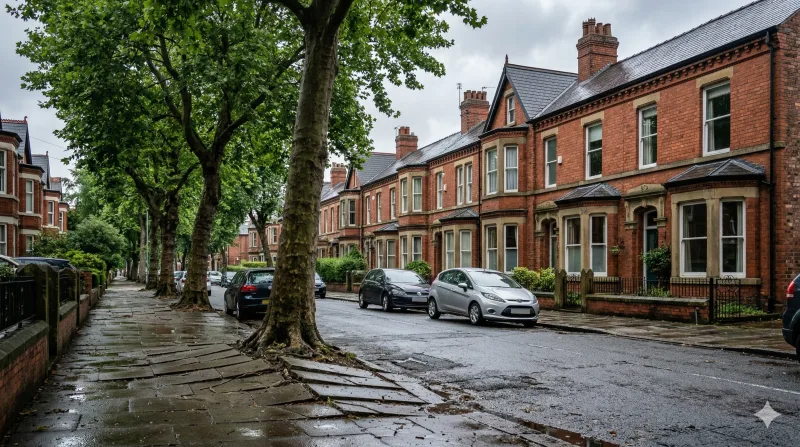
Manchester’s housing stock tells the story of 150 years of industrial growth, suburban growth, and post-war rebuilding. Every era used different pipe materials and building methods, and each comes with its own drainage problems. If you own, or are buying, an older home in Greater Manchester, a CCTV drain survey can show you a lot. Knowing what it can show gives you a fair picture of what you are dealing with.
This guide sets out the defects a survey can show in Manchester homes, grouped by the age of the home. However, not every older home will have problems. Still, each age of home has weak points worth watching for.
Victorian Properties (Pre-1900)
Victorian terraces make up a large part of Manchester’s inner-city housing. You will find them across Longsight, Levenshulme, Rusholme, Moss Side, Hulme, Chorlton-on-Medlock, Ardwick, and large parts of Salford. Builders raised many of them as workers’ housing during Manchester’s industrial boom, and they have stayed in use for well over a century.
Pipe Materials
Victorian drainage often used salt-glazed clay pipes, often hand-thrown rather than machine-made, which means the bore and wall thickness vary. Builders sealed the joints with lime mortar, sometimes with rope or oakum packing added. These joints were never watertight by modern standards, and after 120+ years, the mortar has often broken down completely.
Some larger Victorian homes, and those on corner plots, may have brick barrel drains — egg-shaped or round channels built from engineering bricks, laid in mortar. These served as the main combined sewer for a group of homes. Brick barrel drains can be striking feats of Victorian engineering. However, they are also prone to mortar breakdown, brick spalling, and eventual structural failure.
Common Defects
Displaced joints are a key weakness in Victorian drainage. Ground settlement over a century or more slowly shifts pipe sections out of line. As a result, a step forms at the joint — sometimes just a few millimetres, sometimes enough to create a big blockage. Every displaced joint is also a way in for roots and soil.
Root ingress is widespread, even in Victorian terraces with modest back gardens. Any crack or gap in a pipe joint acts as a water source for nearby roots. Once roots get into the pipe, they grow fast in the damp, rich space, forming a dense mass that traps debris and causes blockages. Since mature trees line the back streets, root intrusion is common in south Manchester homes.
Fractured pipes are common where the load on the ground has changed. This might be a new extension built over a drain run, a driveway laid where a garden used to be, or simply decades of traffic shaking a main road. Clay pipe is brittle, and once a fracture starts, it tends to spread.
Brick barrel drain wear shows up in a few ways: mortar loss between bricks, bricks that have shifted or fallen into the channel, root ingress through the mortar joints, and, in severe cases, partial or full collapse. These repairs are among the most costly, because the structures sit deep, run large, and are hard to reach.
Combined sewer systems are standard in Victorian areas. Foul water and surface water share the same pipes, which means higher flow volumes, greater risk of surcharging in heavy rain, and faster wear on the system. During a Manchester downpour, combined sewers can back up, causing flooding at ground level — mainly in low-lying areas near the Irwell and Medlock.
What to Expect from a Survey
A survey on a Victorian home can show several defects, ranging from minor — cosmetic cracking, slight joint displacement — to significant — root masses, partial collapses. Clay pipe and lime mortar joints of this age tend to wear, so some age-related wear is likely. The key is knowing which defects need attention right away and which you can simply watch.
Edwardian and Interwar Properties (1900–1939)
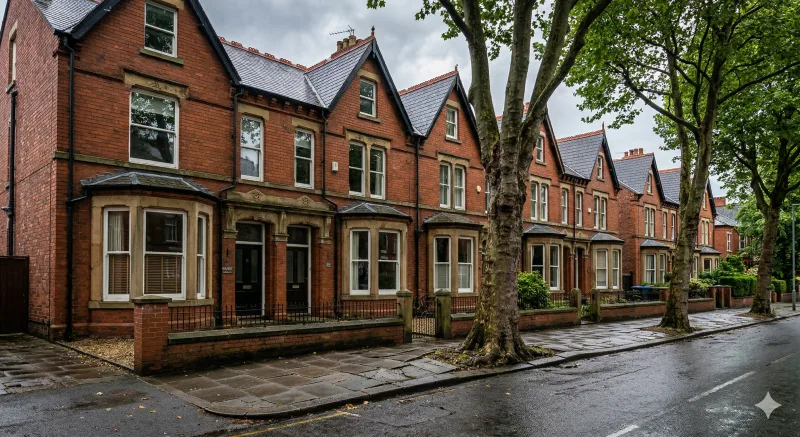
This era covers Manchester’s suburban growth — the semi-detached houses and short terraces built across Burnage, Fallowfield, Withington, Whalley Range, Chorlton, Heaton Moor, and the established parts of Sale, Stretford, and Urmston. Builders usually built these to a higher standard than their Victorian predecessors, using better materials and stricter rules.
Pipe Materials
Machine-made salt-glazed clay pipes are standard for this era — steadier in quality than Victorian hand-thrown pipes, with cement mortar joints replacing the earlier lime mortar. Cement joints are more durable. However, after 80–120 years, they too can crack and wear down.
Builders often used cast iron pipes where drains passed through or under buildings — under cellar floors, through outer walls, and in above-ground soil stacks. Cast iron has a limited life. It rusts from the inside out, slowly thinning the pipe wall until it cracks. This inner rust also roughens the surface, which catches debris and causes blockages.
Stoneware gullies and inspection chambers from this period are usually tough. Still, they can develop cracks and mortar failure at the joints.
Common Defects
Root ingress is the top risk to the drains of this era of housing. Interwar homes usually have larger gardens than Victorian terraces, with mature trees and old hedgerows. Seventy, eighty, or ninety years of growth means large root systems that have had decades to find and use any weak point in the drainage.
Homes in Didsbury, Chorlton, and Withington feel this most. Mature sycamores, limes, and chestnuts line many of these streets, and their roots reach well beyond the tree canopy. As a result, a large tree fifteen metres from a drain run can still send roots into pipe joints.
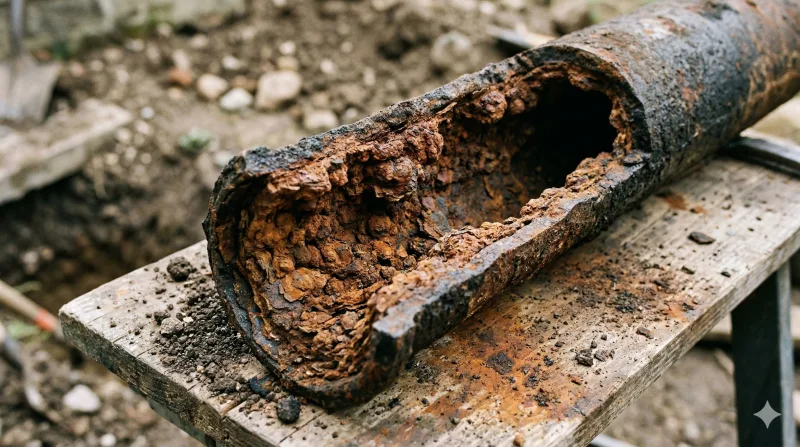
Cast iron rust is another risk. The inner surface of cast iron pipes builds up scale over time, cutting the bore and slowing flow. In time, the pipe wall thins to the point where it cracks. Rusted and failing cast iron sections are common under the floors of 1920s and 1930s homes — often where the inner drainage joins the outer clay pipe system.
Shallow drainage was common in interwar building, with pipes sometimes laid only 300-450mm below ground level. Since they sit so close to the surface, these shallow pipes take more damage from ground load, frost heave, and root growth. Later garden work can also damage them easily — a fence post, a new tree, or even deep rotovating can crack a clay pipe.
Joint wear is present but usually less severe than in Victorian homes, because the cement mortar joints were more durable. However, any joint that has cracked becomes a root entry point, and once roots get in, the damage speeds up.
If you own or are buying an Edwardian or interwar home in Manchester, a CCTV drain survey will identify whether root ingress or pipe wear is affecting your drainage. Book a survey and find out before a blockage or collapse forces your hand.
Post-War Housing (1940s–1970s)
This era covers a huge range of Manchester housing — from council estates built during the post-war housing drive to private developments from the 1960s and 1970s. Key areas include Wythenshawe, parts of Harpurhey and Blackley in north Manchester, Langley in Middleton, and various estates across Salford, Tameside, and Oldham.
Pipe Materials
This is where things get interesting, and not in a good way. The material choices from this era caused more drainage headaches than any other.
Pitch fibre pipes were the pipe of choice from the late 1940s through to the early 1980s. Made from wood pulp soaked in coal tar pitch, these pipes were cheap, light, and easy to fit. Companies widely sold them as a modern swap for clay. The trouble is that pitch fibre soaks up moisture over time, which softens, blisters, and in time warps the pipe wall. The technical term for this is “delamination” — the inner layers of the pipe peel away, creating blocks that trap debris and cause backups.
Pitch fibre is, without exaggeration, the worst pipe material ever widely used in UK domestic drainage. If your Manchester home was built between roughly 1950 and 1982, there is a good chance that some or all of the drainage is pitch fibre.
Builders also used concrete pipes during this period, mainly for larger-diameter runs and on council estates. Concrete is more durable than pitch fibre. However, it can crack at the joints and suffers chemical attack from acidic soil or industrial waste — a real factor in parts of Manchester with an industrial past.
Early PVC pipes began appearing in the 1970s, but builders did not widely use them in home drainage until the 1980s. Early PVC can turn brittle with age, especially if it sat exposed to UV light before installers buried it.
Common Defects
Pitch fibre warping is the headline defect of this era. On camera, you can see blisters and peeled material narrowing the pipe bore. In particular, moderate cases show the bore losing 30-50% of its width. In severe cases, the pipe has all but closed up, leaving only a small gap for water to pass through. These pipes will block in time — it is a matter of when, not if.
Pitch fibre collapse happens once the warping has gone so far that the pipe can no longer hold up the weight of the soil above it. The pipe flattens, either partly or completely. A fully collapsed pitch fibre pipe needs excavation and replacement — re-lining is not always possible once the pipe has lost its round shape.
Joint displacement in concrete pipes is common, especially on sloping sites where the ground has moved. Builders often sealed concrete pipe joints with a tar-based compound or a cement mortar, and neither one flexes much.
Poor fall is a risk in post-war drainage. Builders laid some sections with too shallow a slope to keep water moving fast enough to stay clean, which leads to steady grit build-up and slow drainage. The cause varies — poor workmanship, site limits, or settling after installation — but the result is the same.
What to Expect from a Survey
Post-war drainage can be in one of two states. Either someone has already updated the system — pitch fibre swapped for PVC, for example — and it is in fair shape, or it still has the original pitch fibre drainage, showing heavy wear. The survey findings directly decide whether the drainage needs investment right away.
Modern Properties (1980s Onwards)
Modern homes across Manchester use PVC and uPVC pipes with push-fit rubber ring joints. These materials naturally resist root ingress, chemical attack, and rust. A well-fitted modern drainage system should last 50-100+ years.
Common Defects
Poor fitting is the main risk with modern drainage. Modern pipes are easy to fit — perhaps too easy. Not every builder takes the care needed to get correct falls, proper bedding, and tight joints. A survey can show:
- Bellied (sagging) sections where pipes were laid on loose backfill that has since settled, creating a low point that holds standing water and collects grit
- Poor falls where the slope is too shallow to keep flow moving
- Loose joints where push-fit connections did not click fully home, leaving a gap that lets roots and soil in
- Wrong connections — surface water tied to the foul sewer or the other way round, which is both a rules issue and a working problem
Damage from later work is also common. Extensions, conservatories, driveways, and landscaping all disturb the ground, and drains get damaged in the process. Mini-digger buckets can crack pipes, poorly placed soakaways can crush them, and foundation trenches can sever them.
Root ingress at rubber ring joints happens now and then, mainly where large trees sit close to pipe runs. Modern rubber seals resist roots better than mortar joints. However, they are not immune, especially if installers did not fit the joint correctly.
Common Defect Types Explained in Plain English
No matter the age of the home, the same core defect types can apply. Here is what they mean in plain terms.
Displaced joint: Two sections of pipe have shifted from each other, creating a step or gap. Water still flows, but debris catches on the step, and roots or soil can get in through the gap. Severity depends on how far the joint has moved.
Fracture: A crack in the pipe wall. Can run round the pipe, along it, or both. Minor fractures may stay stable. Major fractures can lead to collapse.
Collapse: Part or all of the pipe has caved in. Partial collapses cut flow. Full collapses stop it entirely. Always needs repair.
Root ingress: Plant roots have got into the pipe, usually through a joint or crack. Can range from a few fine roots (minor) to a dense root mass filling the pipe (severe).
Belly / sag: A section of pipe has dropped, creating a low point where water pools. Grit collects in the pooled water, slowly cutting flow. In time, this causes blockages.
Scale / encrustation: A build-up of calcium, iron, or other mineral bits on the inner pipe surface. Common in cast iron and some clay pipes. Cuts the bore and catches debris.
Infiltration: Groundwater getting into the pipe through defects. Shows that the pipe sits below the water table and joints or cracks are not watertight. Can overload the system and cause surcharging.
Why This Matters
Knowing what a survey can show helps you make good choices. If you are buying a Victorian terrace in Levenshulme, expect to see some age-related wear. The real question is whether it is minor and easy to manage, or severe and costly. If you are buying a 1960s home in Wythenshawe, pitch fibre pipes are a real chance. Knowing that in advance beats finding out only once they block.
A CCTV drain survey takes the guesswork out of it. You get a clear, recorded view of every pipe under your home. Furthermore, a professional explains what each defect means, and what — if anything — needs doing about it.
Whether your Manchester home is Victorian, interwar, post-war, or modern, a CCTV drain survey tells you exactly what is going on underground. Book your survey and get the full picture. Requests are welcome from all of Greater Manchester — ask for a detailed report with clear, practical recommendations.
Local notes
Planning a survey nearby? See the area notes for drains in Bolton, drains in Bramhall, drains in Bury, drains in Castleton and drains in Chadderton. Each area page lists its common drain problems and the surveys you can request there.
Need a CCTV drain survey?
Send one short request. A drainage engineer can quote for a camera survey of your drains. There is no obligation to book.