Signs You Need a Drain Survey Manchester

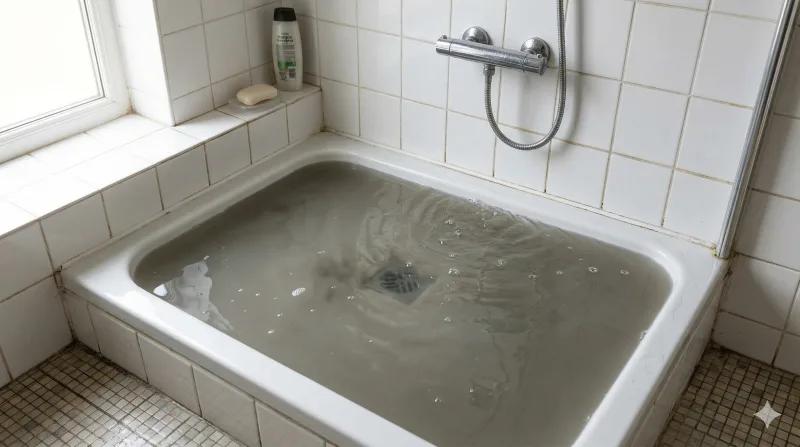
Your drains are out of sight and usually out of mind. Until something goes wrong. By the time most property owners realise there is a drainage problem, the damage is often well established. A small issue that could have been fixed with a simple camera inspection and a targeted repair has become a major excavation job.
Knowing the warning signs that indicate a drainage problem allows you to catch issues early, when they are cheaper and easier to fix. Here are the eight most common warning signs that your drains need a professional CCTV drain survey.
1. Slow Drainage Anywhere in the Property
If water is slow to drain from your kitchen sink, bathroom basin, shower, or toilet, the instinct is to reach for a plunger or call a plumber to rod the drain. But if slow drainage is happening in multiple places — or if it happens repeatedly — a blockage clearance is treating the symptom, not the cause.
A drain survey will identify what is causing the persistent slow drainage. Is there a displaced joint that is trapping debris? Roots growing into the pipe and creating a partial blockage? A belly (a dip in the pipe) where water pools and silt accumulates? A partially collapsed section restricting flow?
Once you know the root cause, you can decide whether to accept the slow drainage (if it is stable) or invest in a proper repair. Repeated drain clearances cost £80–£120 each. Three clearances a year adds up to £240–£360 annually. A one-off repair to address the underlying problem may cost £800–£2,000 but fixes it permanently.
2. Recurring Blockages
If you have needed to unblock the drains more than once in the past 12 months, something structural is wrong. Your drains should not block regularly if they are in good condition.
Recurring blockages usually indicate one of four problems:
- Displaced joints that trap grease, paper, and debris.
- Root ingress that has partially filled the pipe with root material, creating a high-friction area where blockages form easily.
- A belly or sag in the pipe where water pools and silt builds up, eventually blocking flow.
- A partial collapse reducing the bore of the pipe and making blockage more likely.
A drain survey identifies exactly what is causing the blockages. Treatment depends on the cause — a root-cutting visit and possibly re-lining for root problems, excavation and replacement of a collapsed section, or re-lining to smooth the internal surface in the case of a belly. Once the underlying defect is fixed, the blockages stop.
3. Gurgling, Bubbling, or Slow Refill in Toilets
If you hear gurgling sounds in the pipes after water drains away, or if toilets are slow to refill, it usually indicates that air is being drawn into the drainage system. This can happen if the system is becoming blocked or if there is a restriction somewhere downstream that is causing a partial vacuum as water drains.
Occasionally, the problem is simply that the soil stack (the vertical pipe that vents the drainage system) has become blocked with leaves or debris. But if the problem persists after you have cleared the stack, a drain survey is the next step.
In older Manchester properties with clay pipe drainage, gurgling often precedes a more serious issue. The gurgling sound may be the first sign that a displaced joint or fracture is about to become a complete blockage.
4. Unpleasant Smells Around the Property
Persistent drainage smells — particularly around manhole covers, in the garden, or seeping into the property — indicate that water is not draining away properly or that sewage is escaping from a defective pipe.
The smell could be caused by:
- Stagnant water in a pipe with poor flow (a belly or partial blockage).
- Sewage escaping from a cracked or collapsed pipe into the soil around the property.
- A damaged external drain run where sewage is seeping into the ground near the surface.
Drainage smells are not just unpleasant — they can indicate a genuine public health risk, particularly if sewage is contaminating soil near the property. A drain survey will identify where the smell is coming from and what is causing it.
In Manchester’s older properties, drainage smells are sometimes blamed on the neighbour’s drains or the public sewer. A survey clarifies the actual source. If the smell is coming from your private drains, you need to fix it. If it is genuinely from the public sewer, you can report it to United Utilities.
5. Damp or Subsidence in or Around the Property
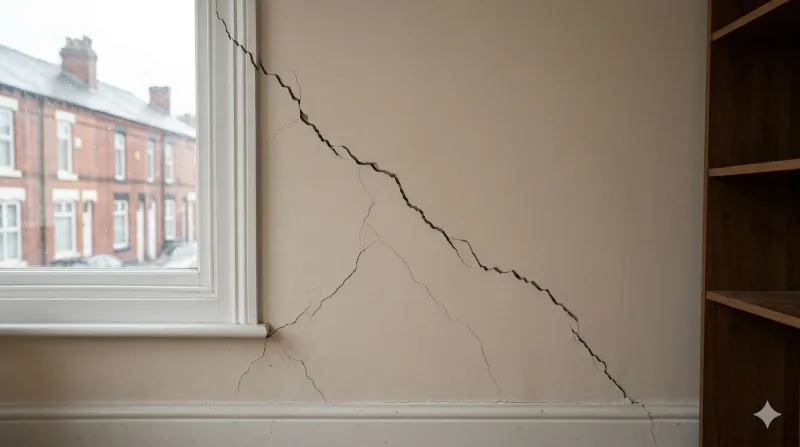
Subsidence is serious. If you notice visible cracks in the walls, sloping floors, or doors that no longer close properly, the house may be settling. One of the most common causes of subsidence in older Manchester properties is a leaking or failed drain.
When a drain is cracked or collapsed, water leaks out into the soil surrounding it. If the drain is near a foundation, this water can soften the soil, reduce its load-bearing capacity, and cause the foundation to settle. Over time, this leads to structural movement and cracks in the building.
Subsidence is expensive to deal with — repairs can cost £5,000–£20,000 or more. But it is preventable. If you spot early signs of damp in the basement, efflorescence (white salt stains) on the walls, or small cracks, a drain survey can identify whether a leaking drain is the cause.
In Manchester, properties built on clay soil (most of the city) are particularly prone to this problem. Clay can be unstable if it becomes saturated. A failed drain that is saturating the soil beneath your house can trigger subsidence.
Insurance companies often require a drain survey when subsidence claims are made — so having one carried out at the first sign of trouble provides documentation and may help with an insurance claim later.
6. Efflorescence or Damp in the Basement or Ground Floor
Efflorescence is the white or yellowish mineral staining that appears on internal walls, typically in basements or on ground floors. It forms when water containing dissolved salts moves through the wall and evaporates, leaving the salts behind.
Efflorescence in a basement usually indicates that groundwater is entering the property. This can be caused by:
- Rising damp (due to a failed damp-proof course).
- Water infiltrating through the walls (due to poor external walls or pointing).
- A leaking drain that is saturating the soil outside the property walls, forcing water in.
If you have persistent damp or efflorescence in a basement and you have ruled out rising damp and external water penetration, a drain survey is warranted. A leaking external drain near the foundations can be the culprit.
Fixing a leaking drain is often simpler than addressing rising damp or wall failures, so identifying the cause is important.
7. Multiple Repairs or Patches in the Garden
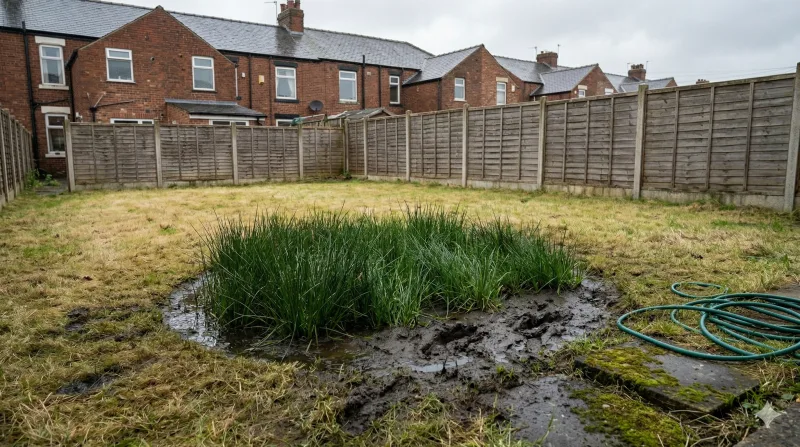
If you can see old repair patches in the garden — areas where the ground has been disturbed and then repaved, or where repairs have been made in the past but have failed again — it suggests a history of drain problems.
Look for:
- Areas of sunken ground suggesting soil loss or movement around pipes.
- Patches of poor grass growth or dead vegetation in lines that might indicate buried pipes or leaks.
- Multiple repair scars in the drive or patio.
These are signs that the previous owners have had to excavate and repair the drains more than once. This usually indicates a persistent underlying problem that has not been fully resolved.
A drain survey identifies what the problem is so that it can be fixed properly this time, rather than patched repeatedly.
8. Damage from Building Work, Tree Roots, or Ground Movement
If you have recently had building work done — an extension, new patio, new drive — and have noticed any of the above signs developing, the building work may have damaged the drains.
Similarly, if you know that large trees are growing near the property, or if the ground is clay (which can shift seasonally), damage to drains is possible even without obvious events.
A drain survey after building work provides evidence of whether the drains have been damaged, which is important for warranty claims or disputes with builders.
In Manchester, particularly in suburbs like Didsbury and Chorlton where properties have large mature gardens, tree root damage to drains is common. If you are seeing warning signs and you know there are large trees nearby, a survey is the logical next step.
When to Act — A Practical Timeline
If you notice one of these warning signs, here is a practical approach:
Weeks 1-2: Observe and record. Note how often the problem occurs, whether it is getting worse, and whether it is affecting multiple areas of the property.
Weeks 2-4: Try a basic remedy if appropriate. If it is a simple blockage, have it cleared. If it is a vent stack issue, clear debris from the top of the soil stack.
Week 4: If the problem persists or recurs, book a CCTV drain survey. The cost (typically £150–£300 for a residential property) is small compared to the cost of an emergency repair or a damaged foundation.
After the survey: Use the findings to decide on action. If the survey shows a minor defect that is stable, you may decide to monitor it. If it shows a progressing problem, get quotes for repairs and schedule them at a time that suits you.
Do Not Wait
The worst mistake is ignoring warning signs and hoping the problem will resolve itself. It will not. Drainage problems are progressive. A small defect becomes worse over time, and the cost of repair increases correspondingly.
A collapsed drain that is caught early (and is a small section) might cost £3,000 to excavate and replace. If left until it has extended along several metres of pipe, the cost rises to £7,000 or £10,000. The difference is often just the time taken to arrange a survey and get quotes.
Similarly, root damage that is caught and treated early can be addressed with root cutting and re-lining. Left untreated, it will eventually cause a blockage emergency, which requires an expensive call-out and emergency repair.
If you are noticing any of these warning signs in your Manchester property, do not delay. A professional drain survey identifies the problem clearly and gives you the information you need to make repair decisions. Contact us to book a survey — we can usually arrange one within a few days of your call.
Need professional advice?
Our Manchester drainage engineers are happy to discuss your situation. Call us for a free, no-obligation chat.