Root Ingress in Drains: Manchester's Tree Problem
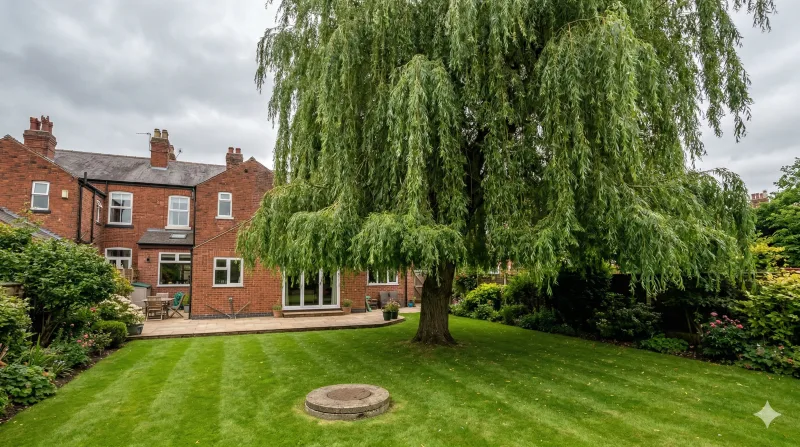
If you live in suburban Manchester — particularly in the leafy southern suburbs — your drainage system is in constant competition with the roots of nearby trees. Tree roots are relentless: they seek out moisture and nutrients, and they will penetrate any crack or joint in a drain pipe to access them.
Root ingress is one of the single most common drainage problems we find on surveys across Manchester. It causes recurring blockages, partial pipe damage, and eventual failures if left untreated. This guide explains how it happens, which Manchester areas are most affected, how to detect it, and what you can do about it.
How Do Tree Roots Get Into Drains?
Tree roots do not actively break into pipes. Instead, they opportunistically exploit defects. Here is how the process typically works:
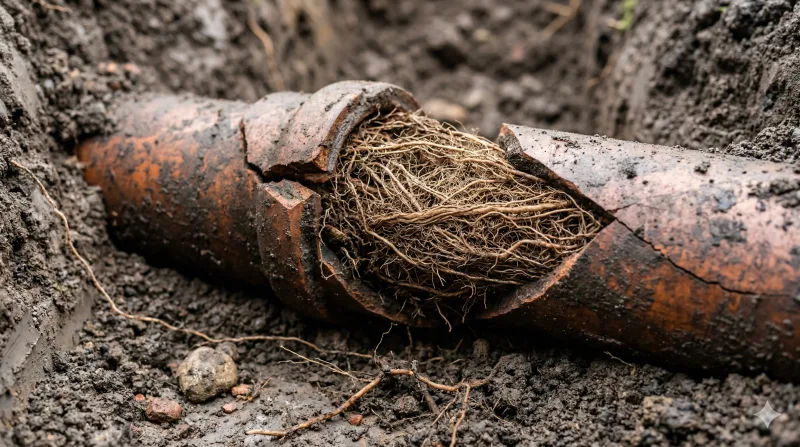
A drain pipe develops a small crack, or a joint becomes slightly displaced. Tree roots sense the moisture escaping — drains are a constant water source, highly attractive to roots. A root hair pushes through the tiny gap. Once inside the pipe, the root finds a nutrient-rich environment and begins to grow vigorously.
The root expands inside the pipe, creating a mass of fibrous material. This root mat traps grease, paper, and other debris, quickly forming a blockage. The trapped material decomposes, becomes slimy, and attracts more roots. Within a few years, a single crack can develop into a dense root mass that almost completely blocks the pipe.
The damage is not just the blockage — it is the ongoing enlargement of the crack as the root grows, which allows more root ingress and more soil infiltration.
Which Trees Cause the Most Damage?
Not all trees are equally problematic. Some species are far more aggressive in pursuit of water than others.
Willow Trees
Willows are the worst culprits. They are semi-aquatic plants that actively seek out water sources. A willow tree within 15 metres of a drain is almost guaranteed to cause problems if the drain has any defects at all. Willow roots are vigorous, fast-growing, and can penetrate even small cracks quickly.
Ash Trees
Ash trees are the second most problematic. They have deep, spreading root systems and aggressively pursue moisture. An ash tree within 10 metres of a drain with any visible defects will likely cause root ingress.
Sycamore Trees
Sycamores are common in Manchester gardens and have strong root systems. They cause moderate to severe root damage if close to drains. A large mature sycamore within 8 metres of drainage is a risk.
Elm and Oak
Both elm and oak have deep root systems and will cause root ingress if close to defective drains, but they are somewhat less aggressive than willow, ash, or sycamore.
Poplars and Birches
Faster-growing species that can cause problems, but damage is generally less severe than from willow or ash.
Fruit Trees and Smaller Species
Apple, plum, cherry, and other smaller garden trees are less problematic. Their roots are generally less vigorous and less drought-seeking. However, they can still cause root ingress if drainage defects are present.
Which Manchester Areas Are Most Affected?
Root ingress is particularly common in Manchester’s southern suburbs, where properties are older, gardens are larger and more established, and mature trees are common. The worst-affected areas include:
Didsbury
Didsbury is famous for large properties with mature gardens. Many Victorian and Edwardian houses have large willow, ash, or sycamore trees planted in their gardens decades ago. Root ingress is extremely common here.
Chorlton
Similar to Didsbury — established suburb with large properties, mature trees, and Victorian/Edwardian housing stock. Root ingress is one of the most frequent survey findings.
Withington
Again, large properties, mature gardens, and a high incidence of root ingress problems. Properties on roads like Burton Road have particularly large trees.
Sale and Altrincham
Wealthy suburbs with large period properties and well-established tree coverage. Root ingress is common.
Levenshulme and Rusholme
Older terraced properties with shared drains and mature trees in back gardens. Root damage is frequent.
Burnage and Fallowfield
Established suburbs with 1920s–1950s semis and detached houses in tree-lined roads. Root ingress occurs regularly.
Northern suburbs like Crumpsall, Prestwich, and Whitefield are less affected — partly because there is less mature tree coverage and partly because housing is newer or has been modernised.
How Does a CCTV Survey Detect Root Ingress?
On a CCTV drain survey, root ingress is visually distinctive:
Early-stage root ingress: Thin root hairs visible through cracks or at joints, not yet causing obstruction. Usually graded as Grade 2 (minor defect, monitor).
Moderate root ingress: A clump of roots visible in the pipe, reducing flow but not causing complete blockage. Appears as a fibrous mass, sometimes with debris trapped in it. Usually graded as Grade 3 (requires attention within 12 months).
Severe root ingress: Dense root mass filling 50–75% of the pipe. Flow is significantly restricted or completely blocked. Usually graded as Grade 4 or 5 (urgent).
The survey will also identify the location of the root ingress — which section of the pipe, how far from the entry point, and how extensive it is. This helps you prioritise repairs if multiple defects are present.
How Do You Confirm Which Tree Is Damaging Your Drains?
If a survey shows root ingress, it is sensible to confirm which tree is causing it (or contributing to it). Look for:
-
Large trees within 10–15 metres of the affected drain run. Measure the distance from the tree trunk to the manhole or inspection chamber where the root ingress was found.
-
Trees that are directly in line with the drain run. If a willow is 20 metres away but the drain runs at an angle that takes it closer to the tree’s root zone, it may still be the culprit.
-
The species of tree. If there is a willow or large ash nearby, they are likely suspects. If only small fruit trees are nearby, they are less likely to be the cause.
-
When the problem started. If root ingress developed suddenly after a period of drought, it is likely the tree seeking water. If it has been present for years, the tree may be long-established and just now doing damage.
How Can You Prevent Root Ingress in Your Drains?
Preventing root ingress entirely is not practical — if there are trees and drains, there is always some risk. However, you can reduce the risk:
Keep Drains in Good Condition
Regular drain clearance removes roots before they become dense blockages. If your drains are blocked and you have trees nearby, a CCTV drain survey will identify root ingress so you can plan a proper repair.
Avoid Planting Large Trees Near Drains
If you are planning new planting in a garden, avoid planting willows, ashes, or large sycamores within 10 metres of known drain runs. Plant smaller species instead.
Manage Existing Trees
If you have a willow or ash tree very close to the house, consider removing it or radically pruning it to reduce the vigour of the root system. This is a last resort — most people are reluctant to remove established trees — but it is an option if root damage is severe and recurring.
Create a Root Barrier
Some property owners install a physical root barrier — a barrier membrane buried in the soil to deflect roots away from the drain. These barriers have limited success; determined tree roots often find a way around them. They are most effective as a temporary measure while you arrange proper pipe repair.
What Are the Repair Options for Root-Damaged Drains?
Once root ingress has been identified, your repair options depend on the severity:
Option 1: Root Cutting and Clearance
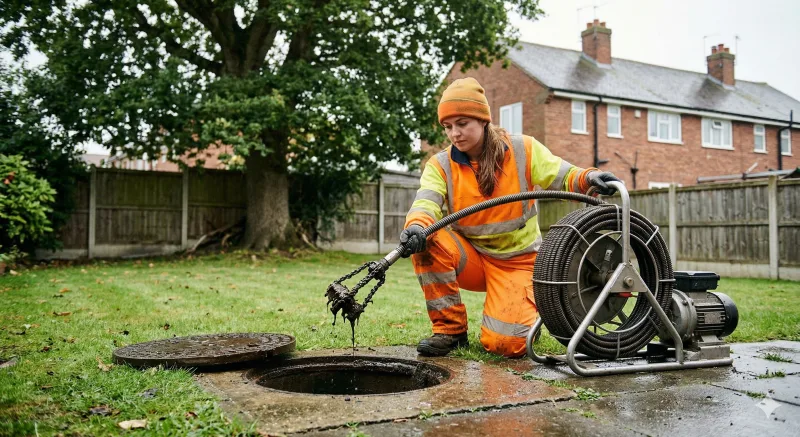
For moderate root ingress causing blockages but not structural damage, a root cutting visit may be sufficient. A rotating cutting head is fed into the pipe and removes the root mass. Water is flushed through to clear debris.
Cost: £150–£350 per visit.
Limitations: This is a temporary fix. The roots will regrow within months or a year, especially if the underlying crack remains unfixed. Useful as an emergency solution if you are blocked and waiting for a longer-term repair.
Option 2: Re-Lining (CIPP)
Re-lining is the standard long-term solution for root ingress. A flexible epoxy-impregnated liner is inverted or pulled into the damaged pipe and cured, creating a new internal pipe surface.
Re-lining:
- Seals the cracks and joints where roots entered.
- Prevents future root ingress (roots cannot penetrate the new plastic liner as easily as old clay or pitch fibre).
- Restores the pipe’s structural integrity.
- Is non-invasive — no excavation needed.
Cost: £1,500–£3,500 for a standard residential run (30–40m).
Advantage: Permanent solution with a 30–50 year lifespan. Solves both the root problem and any associated structural defects.
Limitation: Root cutting is often needed first to clear the dense blockage before lining can be attempted.
Option 3: Excavation and Replacement
For severely damaged pipes or those that have collapsed due to root pressure, excavation and replacement may be necessary.
Cost: £2,000–£6,000 depending on depth and length.
Advantage: Completely removes the problem. Modern PVC pipe is highly root-resistant.
Limitation: Disruptive if structures need to be removed and reinstated.
Option 4: Root Barrier Installation
After excavation and repair, a root barrier membrane can be installed around the repaired pipe to reduce the risk of future root ingress. This slows root growth but is not foolproof.
What Is the Best Approach to Root Damage in Manchester?
If you are a property owner in one of Manchester’s tree-heavy suburbs (Didsbury, Chorlton, Withington) and you experience recurring drain blockages:
-
Have a CCTV drain survey carried out to confirm root ingress and identify the affected section.
-
Identify the likely tree by looking at what is growing nearby.
-
Get a drain clearance if you are currently blocked.
-
Obtain quotes for re-lining from 2–3 drainage contractors.
-
Plan the re-lining for a convenient time — it usually takes 1–2 days and is non-invasive.
-
Consider tree management — if a specific large tree is the culprit and is causing repeated problems, consider whether you are willing to remove or prune it.
Many property owners in south Manchester budget for occasional drain clearance and accept recurring blockages as a cost of living in a tree-lined area. Others invest in re-lining and solve the problem permanently. Both approaches have merit — it depends on your tolerance for the inconvenience and your financial situation.
What Should You Do If You Suspect Root Ingress?
Tree root damage to drains is extremely common in Manchester’s established suburbs. It is not a cause for alarm — it is manageable and fixable. But it is something you should plan for if you own a property with mature trees nearby.
A drain survey will identify root ingress clearly. Re-lining or excavation/replacement will fix it permanently. In the meantime, regular drain clearance keeps the system functioning.
If you are experiencing recurring drain blockages in a tree-heavy area of Manchester, or you are buying a property in Didsbury, Chorlton, or Withington and want to know if root ingress is present, get in touch to book a drain survey. We will identify the problem and advise on the best solution.
Need professional advice?
Our Manchester drainage engineers are happy to discuss your situation. Call us for a free, no-obligation chat.