Do I Need a Drain Survey Before Buying a House in Manchester?

In short: Yes — a pre-purchase drain survey is strongly recommended when buying any house in Manchester, and essential for properties built before 1980. Standard house surveys do not inspect underground drains. A survey can uncover collapsed drains, root ingress, or pitch fibre deterioration that would be far costlier to repair once you own the problem, giving you leverage to negotiate the price or walk away.
Key Facts
- Send a quote request for a homebuyer drain survey in Manchester — cost depends on the property
- A collapsed drain discovered after purchase can be one of the most expensive repairs a homeowner faces
- Zero coverage of underground drainage in standard RICS Level 2 or Level 3 house surveys
- 1950–1980 properties are high risk for pitch fibre pipes, which inevitably deteriorate
- Book before exchange — after exchange you lose negotiating power and your deposit is at stake
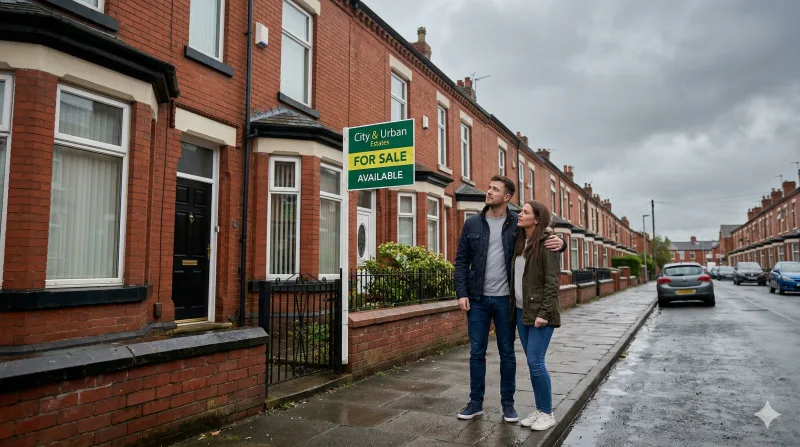
Buying a house ranks as one of the biggest financial commitments most people make. You will pay for a solicitor, a mortgage broker, a house survey, and searches. However, most buyers overlook one check, and it is the one that can save you the most money if it catches a problem.
A pre-purchase drain survey costs a modest amount, so ask for a written quote before you book. A collapsed drain can cost far more to repair. Since the maths speaks for itself, send a quote request online.
Why Standard House Surveys Do Not Cover Drains
This catches many buyers by surprise. Whether you commission a RICS Level 2 (HomeBuyer Report) or a Level 3 (Building Survey), the surveyor checks the visible parts of the property: the roof, walls, floors, windows, electrics, plumbing, and so on. However, they will not check the underground drainage system.
Your house surveyor might lift a manhole cover if one sits within easy reach, and note the visible condition. Still, they will not put a camera down the drains, since they carry no equipment for that. Their report might carry a standard disclaimer along the lines of “underground drainage was not inspected as part of this survey”, and most buyers read straight past it.
So you can receive a house survey that says the property is in good shape, buy the house, and then find out three months later that the main drain has collapsed under the back garden. At that point, it becomes your problem, and your bill.
What Can Go Wrong — and What It Costs
Here are the drainage problems that a pre-purchase survey can show in Manchester homes, along with what drives the repair cost.
Collapsed Drains
A section of pipe has caved in, partially or completely blocking the flow. This can happen gradually — a small crack lets in soil, which builds up over time — or suddenly, when the ground above is loaded (a new extension, a heavy vehicle parked on a driveway over a pipe run). Repair cost depends heavily on the depth of the pipe, the length of the collapsed section, and whether the drain runs under a building or hard landscaping.
Root Ingress
Tree and shrub roots find their way into drain pipes through joints and cracks. Once inside, they grow fast, forming a mass of fibrous material that traps grease, paper, and debris, which leads to repeat blockages. Root ingress shows up especially often in Manchester properties with mature gardens, since the southern suburbs like Didsbury, Chorlton, and Withington offer prime territory for it. Repair typically means excavating and replacing the affected section, and cost depends on how far the roots have spread.
Displaced Joints
Ground movement, settlement, or poor original installation can shift pipe sections out of line, creating a step or gap at the joint. This disrupts flow, traps debris, and lets roots and soil into the pipe. You find this in almost every era of Manchester housing, although it shows up especially often in Victorian and Edwardian properties, where the original lime mortar joints have worn away. Repair costs vary, since it depends on how many joints have shifted and how easy they are to reach.
Pitch Fibre Pipe Deterioration
Builders widely used pitch fibre from the 1950s to the early 1980s. It seemed like a good idea at the time: light, cheap, easy to install. Unfortunately, it soaks up moisture over time, then softens and warps. Pitch fibre pipes blister inside, which cuts flow, then split apart, and eventually collapse. If the property you are buying dates from roughly 1950 to 1980, there is a good chance it has pitch fibre drainage. Re-lining or replacing these pipes gets priced according to how much of the system needs work.
Shared Drainage Disputes
Many Manchester properties, especially terraced houses and older semis, share drainage with neighbouring properties. Since October 2011, a shared drain usually falls to United Utilities, not the neighbours. Still, disputes happen, for example over where a blockage starts. A pre-purchase survey identifies shared drainage arrangements, so you know what you are taking on before you commit to buying.
Manchester Property Types and Their Drainage Risks
Manchester’s housing stock spans over 150 years, and each era brought its own drainage materials and methods. Since you now know what to expect for your property type, you can see why a survey matters.
Victorian Terraces (Pre-1900)
You find these across Longsight, Levenshulme, Rusholme, Moss Side, Hulme, and parts of Salford. These properties typically have clay pipe drainage, often with hand-made pipes and lime mortar joints. Many also have brick barrel drains, large, egg-shaped brick structures that served as combined sewers. Since these systems have passed 120 years, they often show their age. Common defects include fractured pipes, displaced joints, root ingress through worn mortar, and brick barrel drains that have partly collapsed or lost mortar between the bricks.
Victorian terraces in Manchester frequently have combined drainage systems, where foul water and rainwater share the same pipes. Builders saw this as standard practice at the time. However, it means the system handles higher flow volumes, and runs a higher risk of surcharging during heavy rain.
Edwardian and Interwar (1900-1939)
You find these across Burnage, Fallowfield, Withington, Whalley Range, and the older parts of Sale and Stretford. Drainage is usually clay pipe with cement mortar joints, an improvement on the Victorian lime mortar, although it still tends to wear after 80-120 years. Some properties have cast iron sections, especially where pipes pass through or under buildings. Since cast iron corrodes over time, it can eventually crack or collapse.
These properties often have larger gardens with mature trees, so root ingress is a real risk to the drains. A large sycamore, ash, or willow tree within ten metres of a drain run is a red flag.
Post-War Housing (1940s-1970s)
You find these across Wythenshawe, parts of north Manchester, Langley, and various council estates. This era introduced pitch fibre pipes, still the most troublesome drainage material in service today. If you are buying a property from this period, a drain survey is not optional; it is essential. Since pitch fibre wear only ever gets worse, the cost of replacement climbs the longer you leave the pipes to fully collapse.
Builders also used concrete pipes during this period. While concrete holds up better than pitch fibre, it can still crack and run a risk of joint displacement.
Modern Properties (1980s Onwards)
These are built with PVC or uPVC pipes, which generally hold up well and last a long time. Modern drainage systems run a lower risk of major defects, although they are not immune to problems. A survey report may record poor installation, such as wrong falls or weak bedding, damage from later building work, or root ingress at joints where rubber seals have worn out.
Even with a modern property, a pre-purchase survey is still worthwhile. Since installation quality varies a great deal, a survey can show whether the drainage was fitted to a proper standard, or bodged by a builder in a hurry.
Buying a property in Manchester and want to know the condition of the drains before you commit? A homebuyer drain survey gives you the full picture. Book now and ask about the earliest available slot.
When to Book the Survey in the Buying Process
Timing matters. Here is the ideal sequence:
- Have your offer accepted. There is no point paying for a survey on a property you might not get.
- Book the drain survey alongside your house survey. Do not wait for the house survey results first — both can run in parallel, and you want the drain survey results before you reach the point of no return.
- Receive the report before you exchange contracts. Exchange is when you become legally committed to the purchase. Any problems found after exchange are your responsibility.
- Use the findings in negotiations if needed. If the survey reveals defects, you can negotiate a price reduction, ask the seller to carry out repairs before completion, or (in the worst case) walk away.
The key point is: do not leave it until after exchange. Once you have exchanged contracts, pulling out costs you your deposit (typically 10% of the purchase price). Discovering a serious drainage problem at that stage leaves you with no good options.
How to Use Survey Findings to Negotiate

If the drain survey reveals problems, you have several options:
Negotiate a Price Reduction
Present the survey report to the vendor, via your solicitor, with repair cost estimates. Say the survey found a collapsed section. Asking for a price cut that matches the repair estimate is entirely fair. Most vendors will agree to a reduction rather than risk losing the sale, especially since the problem will show up in future surveys too.
Request Repairs Before Completion
You can ask the vendor to carry out repairs before the sale completes. This happens less often, because it gives you less control over the quality of the work. Still, it can work if the defect stays simple, such as a root clearance and patch repair.
Retain Funds in Escrow
In some cases, solicitors can hold back part of the sale price in escrow until the agreed repairs finish. This protects you if the vendor agrees to repairs, but you still want assurance the money is there.
Walk Away
Say the survey turns up a serious drainage problem, a fully collapsed main drain under an extension, for example. You may decide the property is not worth the asking price, even with a reduction. Walking away before exchange costs you the survey fee. Walking away after exchange costs you your deposit instead, so the survey fee counts as cheap insurance.
What Does a Pre-Purchase Drain Survey Actually Involve?
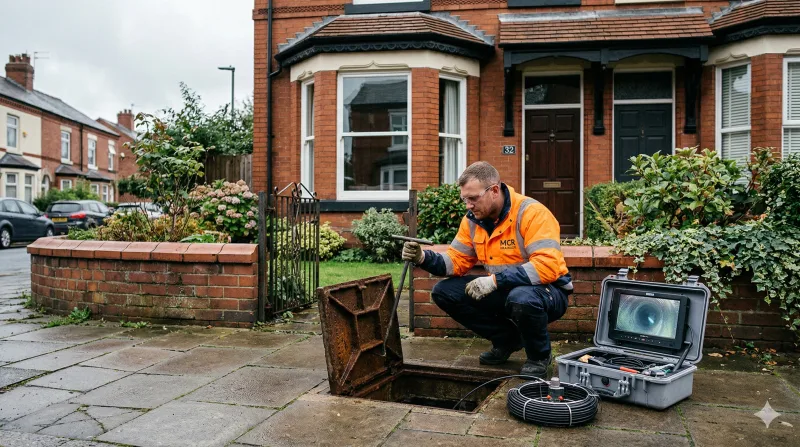
The process is straightforward:
- You book the survey and arrange access to the property. If the property is currently occupied, the estate agent can usually coordinate access. If it is empty, a key may be available from the agent.
- The engineer arrives with a push-rod camera system, locates the manhole covers and inspection chambers, and systematically inspects each drain run.
- On site, ask the engineer for a verbal summary of their findings. If they find something significant, ask them to show you on the camera screen so you can see it for yourself.
- Afterwards, you receive a written drain survey report with condition grading, defect descriptions, annotated images, a drainage plan, and recommendations. Ask the engineer when it will be ready.
- You forward the report to your solicitor and use the findings to inform your decision.
The survey itself typically takes one to two hours on site. You do not need to attend, although many buyers still choose to, so they can see the camera footage in real time and ask questions.
Example Scenarios from Manchester
Here are some typical situations a pre-purchase survey in Manchester can turn up. These stand as illustrative examples, not records of real jobs.
Scenario 1: Victorian terrace in Levenshulme. The buyer has a positive house survey. The drain survey finds a collapsed brick barrel drain under the rear yard, with significant soil ingress. The buyer uses the documented repair estimate to negotiate a price reduction that covers the cost, and completes the purchase.
Scenario 2: 1960s semi in Wythenshawe. The survey finds pitch fibre pipes throughout, with significant delamination and blistering reducing the bore by approximately 40%. There is no blockage yet, but failure is likely within a few years. The buyer negotiates the price down based on the re-lining estimate.
Scenario 3: 1930s semi in Withington. The survey finds extensive root ingress from a large ash tree in the rear garden. Roots have penetrated three separate joints and are causing recurring slow drainage. The buyer asks the seller to obtain quotes for excavation, replacement, and a root barrier, and reduce the price by the highest quote.
Scenario 4: Modern detached in Sale. The survey finds no significant defects. All pipes are in good condition, joints intact, no root ingress, good flow. The survey gives the buyer peace of mind. That is a perfectly good outcome.
Properties Near Water Courses
Manchester has several rivers and watercourses running through it: the Irwell, the Mersey, the Medlock, the Irk. Properties near these watercourses can face higher water table levels, which raises the risk of groundwater seeping into the drainage system. This can lead to surcharging, worn pipe bedding, and faster wear on pipe joints.
If you are buying a property near a watercourse, a drain survey matters even more. The survey can show whether groundwater is entering the drainage system, and whether pipe joints show signs of washout or wear.
The Bottom Line
A homebuyer drain survey costs a fraction of what you are spending on the property, and a tiny fraction of what drainage repairs can cost. For older Manchester properties, anything built before the 1980s, count it as essential, not optional. For modern properties, it still stands as a sensible precaution.
Your house survey only looks at the drains from the surface. Neither do your solicitor’s searches. So the only way to know the condition of the drainage system is to put a camera down and look.
You can request a pre-purchase drain survey anywhere in Manchester and Greater Manchester. Ask for a written quote before any work starts, and ask when the report will be ready. Get in touch via our online form to book. We’ll pass your request on straight away. No obligation.
Local notes
Planning a survey nearby? See the area notes for drains in Ashton-in-Makerfield, drains in Atherton, drains in Failsworth, drains in Gorton and drains in Hindley. Each area page lists its common drain problems and the surveys you can request there.
Need a CCTV drain survey?
Send one short request. A drainage engineer can quote for a camera survey of your drains. There is no obligation to book.